
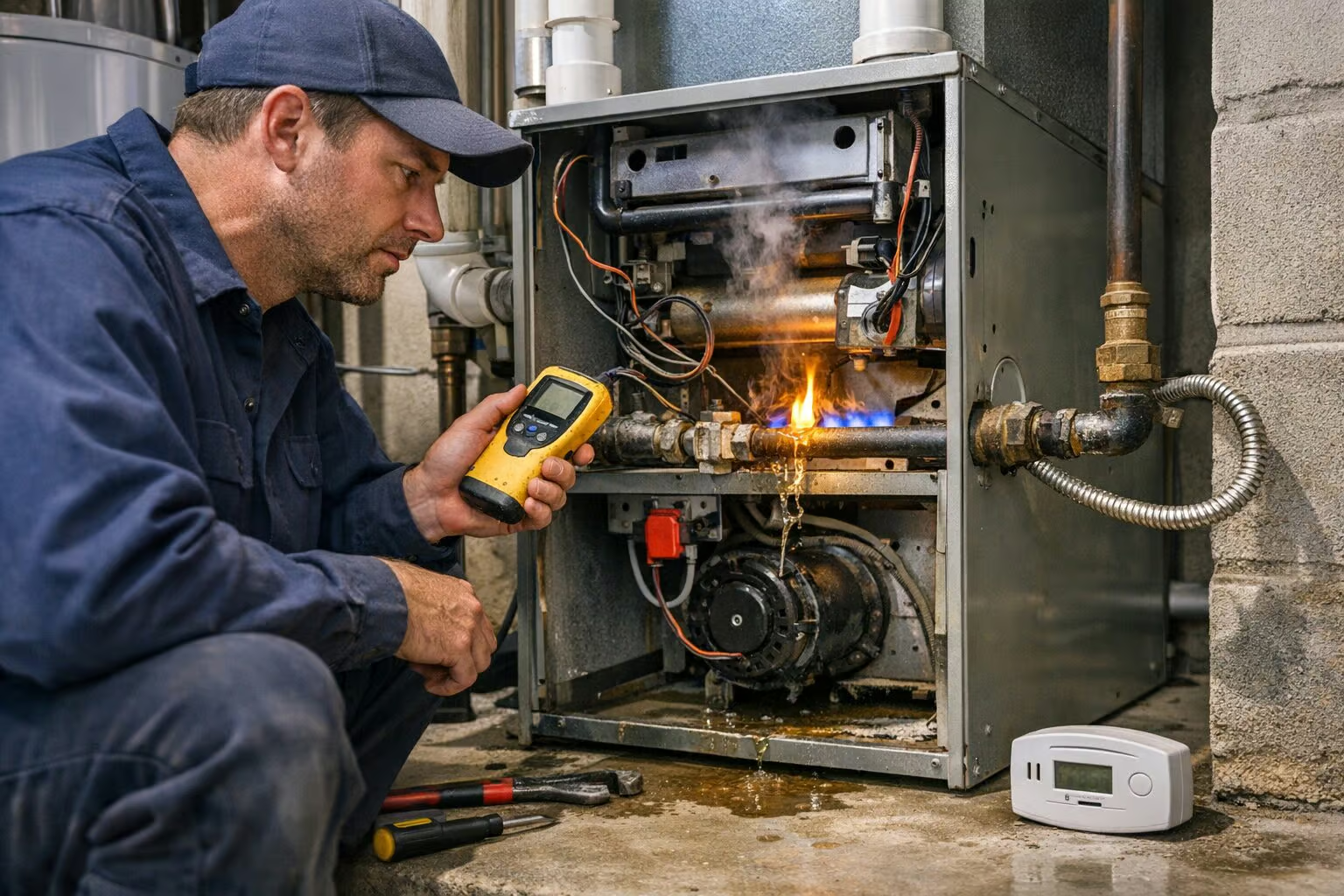
Gas and Safety-Related Furnace Issues
Why knowing these issues matters
A gas furnace problem can turn unsafe fast. Delayed ignition, blocked venting, or a gas leak can put people and property at risk. Small warning signs often show up before a full failure. Acting early helps prevent fire, carbon monoxide exposure, and costly damage.
Gas furnace not starting safely after a shutdown
If a furnace will not restart after a shutdown, do not keep cycling the thermostat and power. Repeated restart attempts can hide the real fault and may let gas build up before ignition.
A safe restart depends on the shutdown cause. A tripped limit switch, dirty flame sensor, failed pressure switch, or ignition fault each points to a different problem. Guessing wrong can bypass a safety control that was doing its job.
Start with the basics, but stop if anything seems abnormal.
- Check that the thermostat is calling for heat
- Confirm the service switch and breaker are on
- Listen for inducer fan start-up, then ignition attempts
If the furnace starts and stops in a short cycle, that is not a successful restart. It often means overheating, poor airflow, or a venting issue, and continued operation can damage the heat exchanger, consider contacting an emergency furnace repair company.
Carbon monoxide warning signs and urgent furnace checks
Carbon monoxide problems do not always come with obvious furnace failure. The system may still run while producing unsafe conditions. That is what makes this issue so dangerous.
Warning signs include frequent headaches indoors, nausea, stale air near supply vents, soot around the furnace, and detectors going off. A yellow burner flame instead of a steady blue flame can also point to combustion trouble, though burner color alone is not enough to diagnose the cause.
The main risk is delay. If carbon monoxide is suspected, leave the area, call emergency services if symptoms are present, and do not re-enter just to inspect the furnace. A heat exchanger crack, blocked flue, or burner issue needs immediate testing with proper instruments, not visual guesswork.
Addressing gas odours near the furnace
If you smell gas near the furnace, do not try to find the leak with repeated furnace starts. Do not flip switches, use open flames, or assume the smell will clear on its own.
Shut off the system if it can be done safely, leave the area if the smell is strong, and arrange a proper check. A structured review like a gas furnace inspection checklist helps separate a simple connection problem from a broader combustion safety concern.
A gas odour may come from a loose union, failing shutoff valve, sediment trap connection, or burner compartment issue. In some cases, a brief smell at startup has a specific cause, but treating every gas smell as normal is a common and risky mistake.
Ventilation and exhaust blockage troubleshooting
A furnace needs clear intake and exhaust paths to run safely. If either path is blocked, the pressure switch may prevent ignition, or worse, combustion gases may spill back indoors.
Common blockage points include snow, leaves, bird nests, collapsed vent sections, and moisture buildup. A partial restriction is often harder to spot than a full blockage because the furnace may run inconsistently instead of failing outright.
Do not assume the problem is only outside. Vent slope, joint separation, and corrosion inside the mechanical area can affect draft and condensate flow. In Norfolk County, weather swings can make exterior vent terminations more vulnerable to icing and debris, especially during heavy wind and wet freeze conditions.
Emergency shutoff and system safety inspections in Norfolk County
Every household should know where the furnace service switch and gas shutoff are located before a problem happens. In an actual emergency, confusion wastes time and can make exposure or fire risk worse.
If you are scheduling a furnace safety inspection, ask whether the check includes combustion testing and vent evaluation, not just a filter change and quick startup. In Norfolk County, that level of detail matters when a furnace has a history of lockouts, odours, or venting trouble.
A safety inspection should confirm more than simple operation. It should include burner performance, venting, safety controls, gas connections, shutdown response, and visible heat exchanger concerns. A basic heat call is not enough to prove the system is safe.
When to stop troubleshooting and call for immediate help
Some furnace issues should not be treated as routine service calls. Gas smell, carbon monoxide alarms, scorch marks, repeated ignition failure, or signs of exhaust spillage all call for immediate action.
Do not reset the same fault over and over. That can erase useful symptoms while the underlying hazard remains. Turn the system off if needed, keep people clear of the area, and have the furnace inspected before putting it back into service.